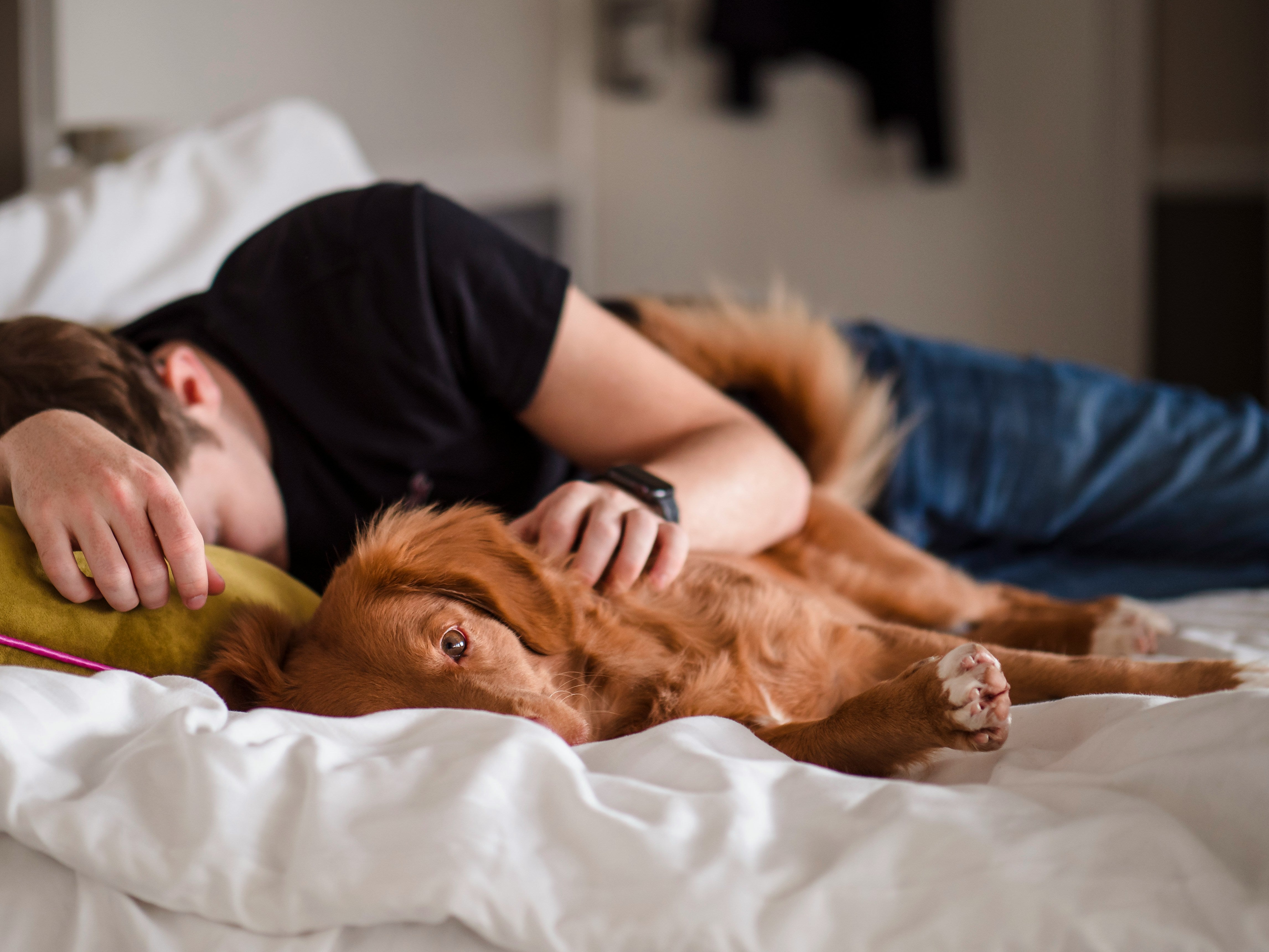
Your inner “sleep narrator” is charming—but not always accurate. Here’s how to cut through the noise with multi-night, at-home data so your training, recovery, and mood actually improve.
If you often tell yourself “I sleep plenty” or “I’m just an insomniac,” careful—intuition about sleep is frequently off. In everyday monitoring, a substantial share of people who feel well-rested are objectively short on sleep. Meanwhile, many who feel insomniac look normal on brain-based measures and simply underestimate how much they sleep.
Two Common Sleep Illusions
Illusion #1: When you’re short on sleep, you tend to overestimate it.
Among people who think they’re getting enough, nearly half are actually sleep-deprived on objective measures. The more deprived, the bigger the gap—moderate to severe short sleepers can overestimate total sleep time by roughly a quarter. In short, your brain can hand you a comforting “you slept plenty” story that isn’t true.
Illusion #2: Many “subjective insomniacs” aren’t objectively insomniac—but they underestimate sleep.
On common insomnia scales, a large proportion of high scorers don’t meet objective insomnia criteria. Their brain-based sleep profiles resemble non-insomniacs, yet they systematically judge their nights as shorter. Only when subjective and objective insomnia align do we see clear signs like lower sleep efficiency and longer wake-after-sleep-onset.
Why Feeling ≠ Physiology
Our sense of “good” or “bad” sleep tends to track macro structure—sleep efficiency and time awake after sleep onset. But we’re poor at noticing frequent micro-arousals (sleep fragmentation) or a lack of deep N3 sleep. Even sleep-disordered breathing, which can quietly undermine stability and next-day energy, often goes undetected by subjective quality alone.
you can wake up thinking it was “a decent night,” yet still carry a heavy load of hidden arousals, shallow sleep, and oxygen dips.
Most of us judge sleep by what we can recall: total time asleep (TST / SE) and how long we were awake after dozing off (WASO). These “macro-structure” signals do track how we feel. But frequent, brief arousals (fragmentation) and insufficient deep sleep (N3) barely register in feelings and are easy to overlook. Even breathing-related instability (snoring, mild desaturations) often goes unnoticed. In population data, subjective quality mainly follows SE/WASO, while short-arousal load (e.g., SFI) and N3 quantity barely move the self-rating. And here’s the kicker: even among people who feel “satisfied,” average 3% ODI can still exceed the light sleep apnea threshold—meaning the night wasn’t as stable as it felt.
Dozens of seconds-long arousals may never make it into memory, yet they slice the night into tiny segments. Clinicians therefore read the stage transitions rather than relying on “how many times did you wake up?” For robust quantification:
Unstable nights commonly combine frequent short arousals with too little or too brief N3. People sense “time was short” or “I was awake a lot,” but rarely perceive “depth was low.” That depth deficit still taxes physical recovery, memory consolidation, and next-day resilience—even when the night didn’t feel terrible.
With sleep-disordered breathing, desaturations and arousal bursts may not feel like “bad sleep”—and higher SAS risk doesn’t always show worse subjective quality or daytime sleepiness scores. Many only realize the difference after treatment. Translation: sleepiness and “sleep quality” are relative sensations that can be habituated. No complaint ≠ no problem.
As objective sleep becomes shorter, people tend to overestimate their total sleep time—roughly +5.7% in mild short sleep, climbing to about +22.8% in moderate-to-severe short sleep. Even among those who feel they sleep “enough,” about 44.9% are objectively short (≈37.1% mild, 7.9% moderate/severe). On the flip side, many with subjective insomnia but no objective insomnia systematically underestimate their sleep. Feeling and physiology pull apart in both directions.
At-home EEG shows a small first-night effect but large night-to-night variability. A single night can mistake a fluke “good” or “bad” night for your norm and miss true patterns. Multi-night data markedly boosts detection: for example, in people who screen high on insomnia questionnaires, the proportion labeled with objective insomnia jumps from about 21.3% (first night only) to around 33.8% with several nights—many events don’t happen on night one. Moral: don’t anchor on one-night results. With multi-night, at-home EEG, the “first-night effect” is small—but night-to-night variability is big. One-night snapshots can miss objective insomnia and breathing-related instability. As you add nights, detection rates climb and the picture sharpens. The simplest rule of thumb: several nights tell the truth a single night can’t.
A Practical Upgrade Plan
- Treat feelings as clues, not verdicts. “I’m wiped” or “I slept fine” should trigger a check, not close the case.
- Run multi-night, at-home monitoring. It mirrors real life and reduces the risk of false reassurance—or false alarm.
- Watch the right metrics. Fragmentation (e.g., sleep fragmentation index) and deep-sleep episode duration capture the hidden arousal load your feelings miss.
- Screen for quiet disruptors. Breathing-related events can erode stability even when nights feel okay.
- Protect the basics. Aim for a sleep window around 7 hours or more; quality work lands better on a foundation of enough time in bed.
Final Thought
Progress isn’t only about training harder—it hinges on absorbing the work. When sleep time, stability, and regularity improve, you’ll notice steadier energy, more reliable sessions, and fewer “mystery slumps.” Multi-night data is the bridge from how you felt last week to how your body actually recovered—so you know whether to add load, pull back, or change the rhythm.
The first step in healthier sleep is aligning perception with reality. Feelings can be misleading; good data isn’t. When you look at your nights through a multi-night, at-home, quantifiable lens, your schedule tweaks, training plan, weight goals, and mood support stop being guesswork—and start making a difference.
Reference
Masaki, M., Tsumoto, S., Tani, A., Tominaga, M., Seol, J., Chiba, S., Miyanishi, K., Nishida, K., Kawana, F., Amemiya, T., Hiei, T., Kanbayashi, T., & Yanagisawa, M. (2025). Discrepancies between subjective and objective sleep assessments revealed by in-home electroencephalography during real-world sleep. Proceedings of the National Academy of Sciences of the United States of America, 122(3), e2412895121. https://doi.org/10.1073/pnas.2412895121