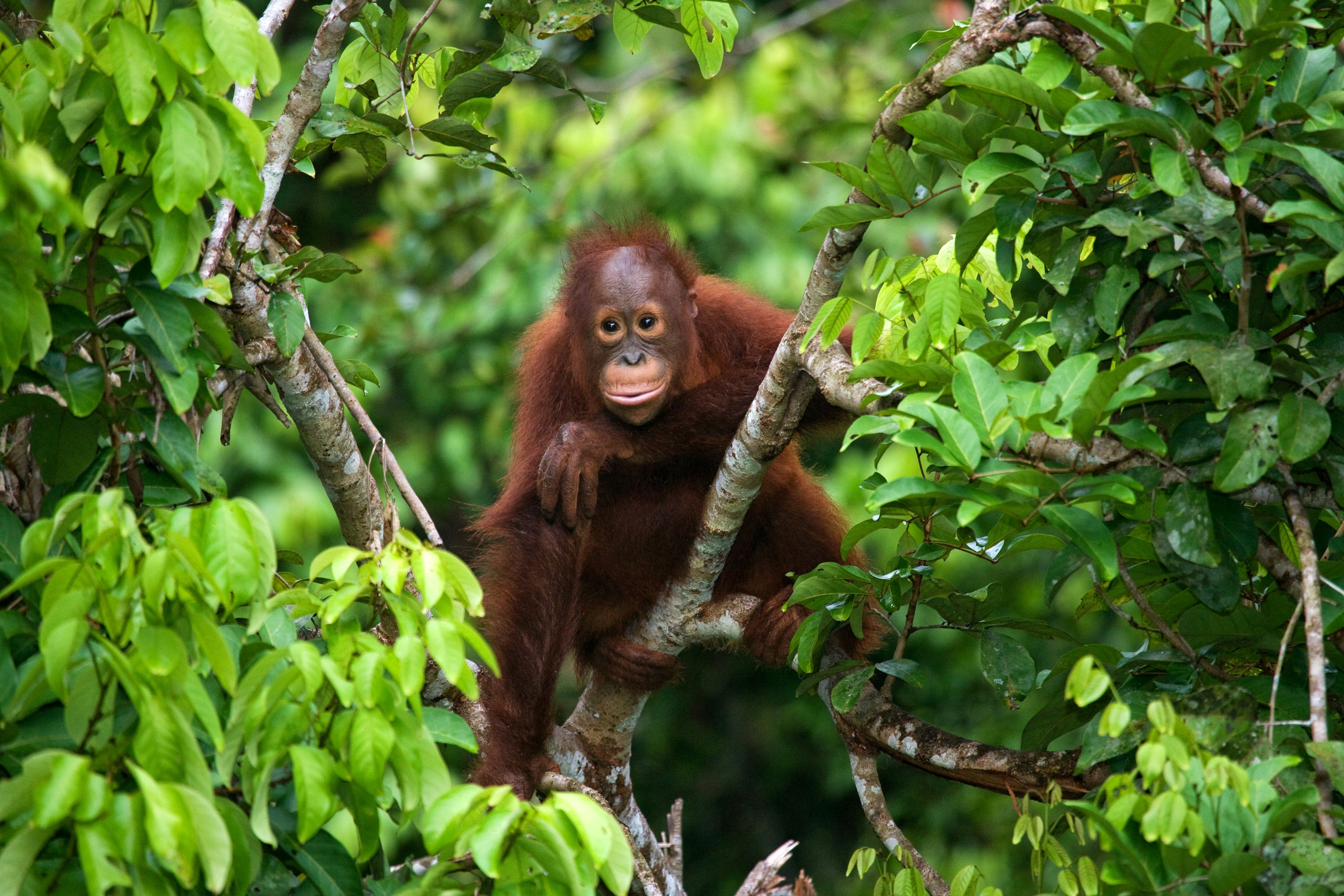
Picture a forest resident who can hand-craft a leaf mattress in under ten minutes, then, when eyelids droop at noon, whips up a mini day-nest on the spot. That’s everyday life for Sumatran orangutans. They search for fruit, dodge weather and rivals, and manage “fission–fusion” relationships—sometimes together, often apart. Sleep, therefore, is constantly squeezed by everything else on the schedule.
When Company Shows Up, Sleep Bows Out
As the number of nearby conspecifics rises, both the overnight sleep period and the total daytime nap time tend to shrink. Put simply: the more social the scene, the tighter the sleep budget. Orangutans aren’t antisocial—they accept the real energy and sleep costs of togetherness because the benefits are just as real: mating opportunities, social learning, infant safety, and smoother relationships. Even nighttime proximity can carry payoffs, enough that individuals sometimes “donate” minutes from their sleep to stay in the social loop.
Why does company trim shut-eye? Start with attention. Sharing space means tracking who’s where, who’s moving, and whether that rustle is a friend, a rival, or a fruit haul worth following. That “social vigilance” tax doesn’t always look dramatic—it can simply nudge bedtime later, pull wake-up a little earlier, or chip a few minutes off each nap until the day’s recovery window feels noticeably thinner.
Then there’s scheduling friction. Orangutan society runs on a fission–fusion clock: small parties form and dissolve through the day as individuals link up at fruiting trees, part ways, and sometimes reunite. Each join-up is a micro-negotiation—do we keep traveling, stay and feed, relocate to quieter canopy? Those decisions can delay nest-building at night or cut into midday rest. More companions = more coordination = fewer pristine, interruption-free minutes for sleep.
Noise and micro-disturbances add up, too. Friends aren’t exactly lullabies: branch sways, positional shuffles, approach/avoid maneuvers, soft calls—all innocent, all capable of breaking the drowsy momentum that turns “I could nap” into “I am napping.” Across a day, a handful of small interruptions is enough to turn one longer nap into two shorter ones—or to skip the nap entirely when foraging or travel opportunities beckon.
Costs and benefits aren’t uniform. Females navigating maternal duties may trade some nap time to keep infants within safe proximity of others, while big males juggle status, spacing, and access to resources—social math that can favor wakefulness in strategically chosen moments. The key point is flexibility: orangutans downshift sleep when the social return on wakefulness looks high, and make up the difference later if conditions allow.
Crucially, none of this implies a “sleep deficit spiral.” The social squeeze is usually short-term and context-specific. When the party disperses or the feeding rush fades, orangutans pivot—sneaking in compensatory naps or settling earlier the next night. Sleep isn’t abandoned; it’s actively budgeted around social life.
Naps as the Fire Brigade: Pay Back Night Sleep Debt by Day
A typical night finds an orangutan settled in its nest for roughly 12 hours and 50 minutes (think of this as the overnight sleep window). If that window is shorter than usual, daytime naps step in as a flexible counterbalance. Lose an hour at night? Total nap time the next day grows accordingly. In other words, even when social plans and foraging fragment the day, short, well-timed naps pull sleep back toward steady-state.
Here’s a fun snapshot: on many tracked days, orangutans built at least one day-nest, racking up about an hour (give or take) of nap time, often split across more than one short rest. It’s “power-napping” with arborist flair.
Beyond Social Life: Behavior and Ecology Reshape the Sleep Schedule
Long travel days trim the night. When individuals cover more distance, their evening wakefulness tends to stretch, pushing nest-time later and shaving minutes off the overnight period. If you’ve ever stacked workouts, commuting, and social plans into the same day, you know the feeling—it’s not that you’re sleepier, it’s that you go to bed later.
Heat and rain act like a behavior dial. Hotter days compress nap time—staying in the shade, moving deliberately, and managing heat take precedence. Rain flips the script: day-nests see more action and naps last longer. At night, cold snaps can shorten the nest period. The friendliest combo for sleep looks familiar: nights not too cold, days not too hot.
More calories ≠ more napping. On days with higher energy intake, total nap time often gets shorter. Think of it as priority scheduling: when food is secure, time shifts toward movement and social activity, while naps remain a flexible tool that expands only when needed.
Age and sex matter. Females with infants and large, flanged males generally nap longer—likely reflecting the distinct energy costs of caregiving and body size.
Leaf-Bed Engineering: Turning Sleep into an “Anytime Function”
Orangutans don’t just drape themselves across a branch. They bend and weave supports, line the frame with leafy “padding,” and sometimes add a leaf pillow or blanket. Adults can assemble a night bed in roughly 7–9 minutes, and they often build purpose-made day-nests for short naps. This bit of arboreal engineering buys deeper, steadier, safer rest—plus reliable, on-demand nap spots. Sleep becomes a function you can launch whenever conditions allow.
Takeaways for Modern Humans: Learn Some “Orangutan-Style Nap Craft”
Don’t treat naps as laziness. When last night ran short and today is packed, a 10–20-minute nap can nudge your sleep homeostasis back toward baseline. It’s a pressure valve, not a guilty pleasure.
Give sleep a reserved seat. When social density spikes—meetings, dinners, travel—or your movement load climbs, schedule deliberate quiet windows. If wild orangutans can’t out-muscle the clock, neither can we.
Manage temperature and environment. Nights that are too cold or days that are too hot undermine good sleep and good naps. When the forecast says “hot + busy,” shift recovery to cooler, quieter slots and spaces.
Bring the “leaf-bed” philosophy home. You don’t need to weave branches, but you can tune temperature, light, noise, and bedding so sleep is easy to start. Having an “always-ready nap spot” beats white-knuckling your way through fatigue.
Bottom line: for orangutans, sleep isn’t a fixed block on the calendar—it’s actively managed amid the push and pull of social life, foraging, travel, and weather. Learning to schedule your sleep the way they do is a forest lesson perfectly suited to modern life.
Reference
Ashbury, A. M., Lamarque, F., Permana, A. L., Rahmaeti, T., Samson, D. R., Utami Atmoko, S. S., Crofoot, M. C., & Schuppli, C. (2025). Wild orangutans maintain sleep homeostasis through napping, counterbalancing socio-ecological factors that interfere with their sleep. Current Biology, 35, 3163–3173. https://doi.org/10.1016/j.cub.2025.05.053