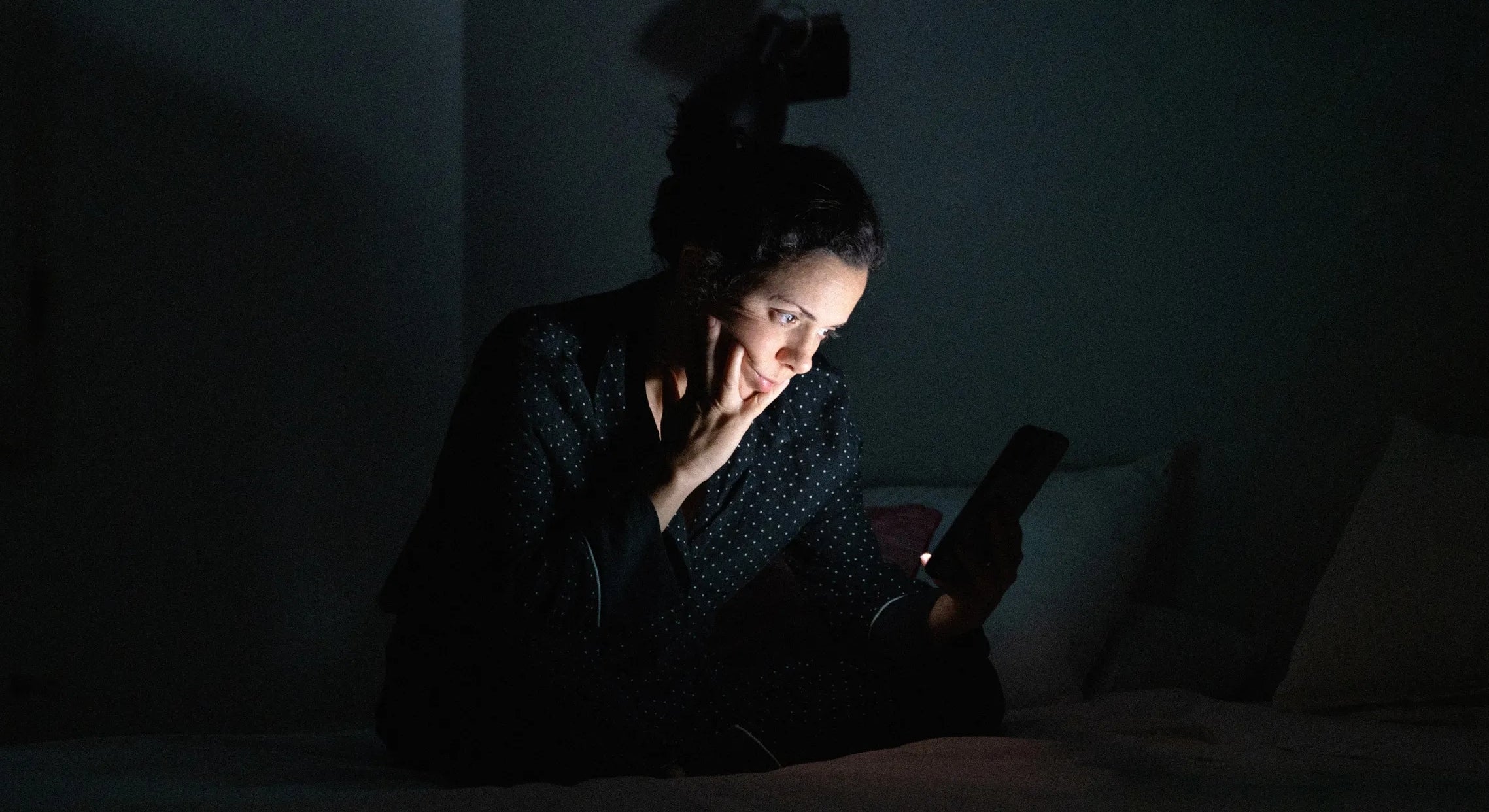
If you have tried a sleep app, you may recognize the same pattern: you track your nights, read the insights, adjust a few habits, and still wake up feeling unrefreshed. The practical question is not whether sleep apps are useful, because they often are for awareness and routine building, but whether app only support can solve the specific bottleneck you face. In sleep science, perceived recovery depends not only on total sleep time but also on sleep continuity, meaning how stable sleep remains across the night without frequent micro awakenings. When sleep is repeatedly interrupted by unpredictable sound, partner movement, or a changing bedroom soundscape, a tracker may describe the pattern while leaving the trigger untouched. For a reputable overview of sleep health fundamentals, you can anchor this topic with CDC sleep guidance.
If you want the Fitnexa pillar that organizes deeper sleep education and practical next steps, start with Sleep.
Why tracking alone often plateaus in real life
A sleep app is fundamentally a measurement and behavior support tool, so it tends to perform best when the main barrier is timing, routine consistency, and basic sleep hygiene. The plateau appears when the main barrier is disruption, because tracking can capture outcomes but cannot reliably change what your brain experiences at 2:17 a.m. when traffic spikes, a door clicks, pipes shift, or a partner snores. This is also why environmental noise is treated in public health as a health relevant exposure associated with sleep disturbance rather than a minor inconvenience, as summarized in the WHO overview of environmental noise and health. When symptoms persist despite reasonable habit changes, it also helps to remember that consumer sleep tech is not designed to diagnose or treat disorders, which is the core point of the AASM position statement on consumer sleep technology.
What sleep apps do well when the environment is stable
When the bedroom environment is relatively stable and awakenings are occasional, app only support can be effective because it helps you build a repeatable baseline. It can reveal bedtime drift, reinforce a consistent sleep window, and clarify how inputs such as caffeine timing, late meals, light exposure, and wind down routines correlate with next day fatigue when you look at trends over weeks rather than single nights. In other words, an app can reduce random trial and error by making habits visible and easier to adjust with small, consistent changes.
Where app only often falls short for noise, frequent wake ups, and fragmented sleep
The limitation becomes clear when sleep is fragmented: an app can estimate sleep, log awakenings, and suggest habits, but it cannot meaningfully reduce environmental sound exposure or stabilize the sound field throughout the night. Sleep remains an active neurological state in which the brain monitors sensory input, and abrupt changes in sound can increase arousal and trigger micro awakenings even when you do not fully remember waking. This is one reason many people report the same frustrating outcome: their tracking looks different, but their restoration does not. If your bedroom is already noisy, improving the environment often makes every solution work better, and The importance of a healthy sleep environment offers a practical starting point. Clinically, it is also appropriate to include a conservative boundary: if you have persistent excessive daytime sleepiness, loud snoring with gasping, or long lasting insomnia that does not improve, consider speaking with a clinician rather than repeatedly optimizing consumer tools.
What changes with hardware plus AI, from measurement to intervention
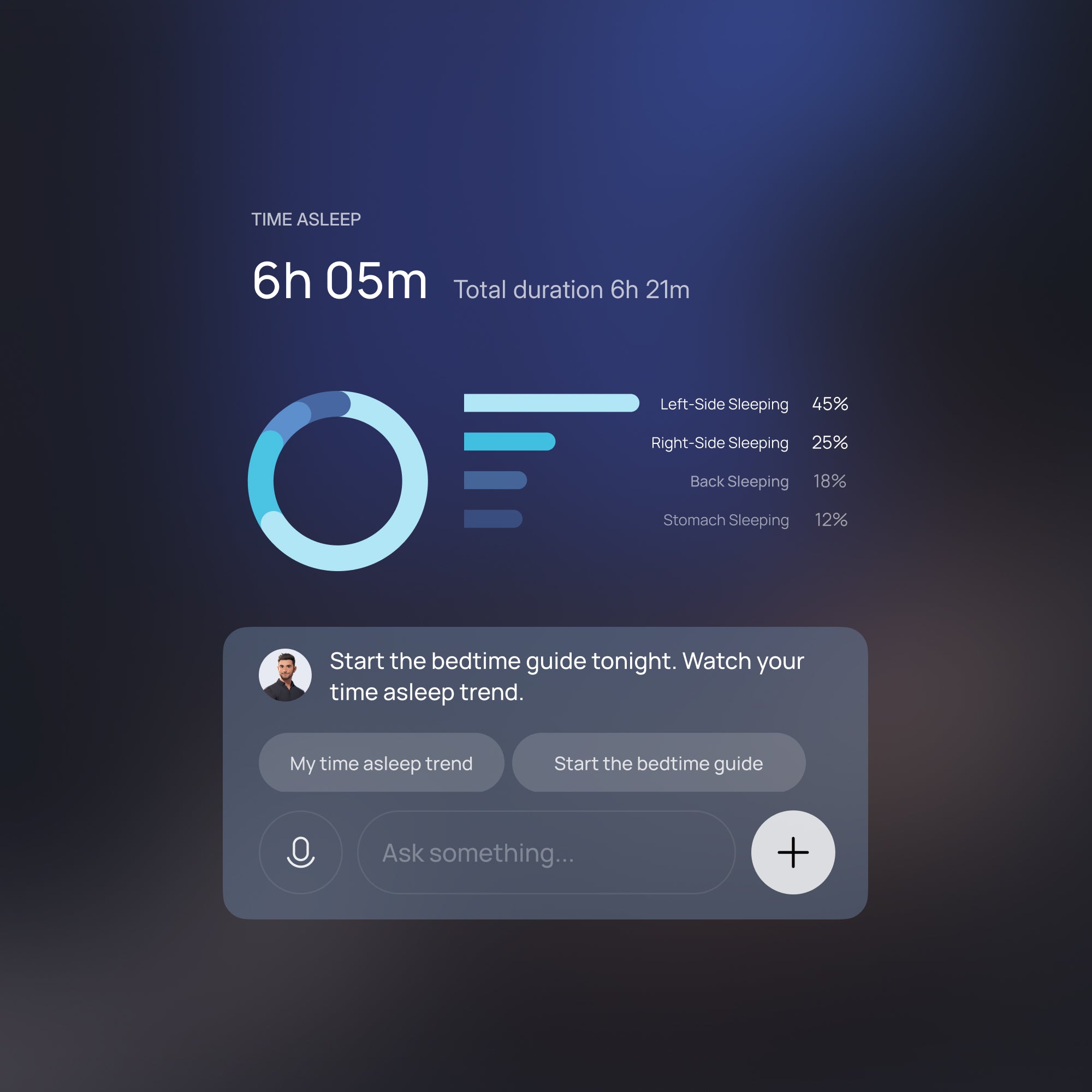
Hardware plus AI becomes most useful when it completes two missing steps in the app only loop: reducing disruption and translating patterns into actions you can take tonight. The first change is practical and physiological: reducing the noise load at the ear can help protect sleep continuity by lowering the likelihood that sudden sound changes push the brain into lighter sleep states. The second change is behavioral: AI is only valuable when it reduces decision fatigue by prioritizing likely drivers and producing a concise Tonight Plan, instead of adding more dashboards. This structure matters because sleep improvement is typically environmental plus behavioral, not purely informational, and consistent execution is often what separates short term experimentation from durable improvement. For a medically grounded overview of why persistent poor sleep matters, see the NHLBI overview of sleep deprivation.
How to choose what is right for you, a decision rule you can use
Rather than treating this as a general tech preference, the more reliable approach is to match the tool to the dominant failure mode of your sleep. If your room is quiet, awakenings are rare, and your main struggle is routine consistency, app only support is often enough to build stable habits and improve outcomes over time. If noise or movement wakes you up, you wake frequently without a clear cause, or you feel stuck in a loop of tracking without meaningful improvement, hardware plus AI is often the more effective next step because it reduces disruption and makes the next action clearer. If your symptoms suggest a disorder, such as loud snoring with gasping, persistent insomnia, or severe daytime sleepiness, the priority shifts toward clinical evaluation because consumer tools are not designed for diagnosis or treatment. If you want a practical internal overview of common conditions and next steps, see Common sleep disorders and next steps.
Where Fitnexa SomniPods 3 fit when app only is not enough
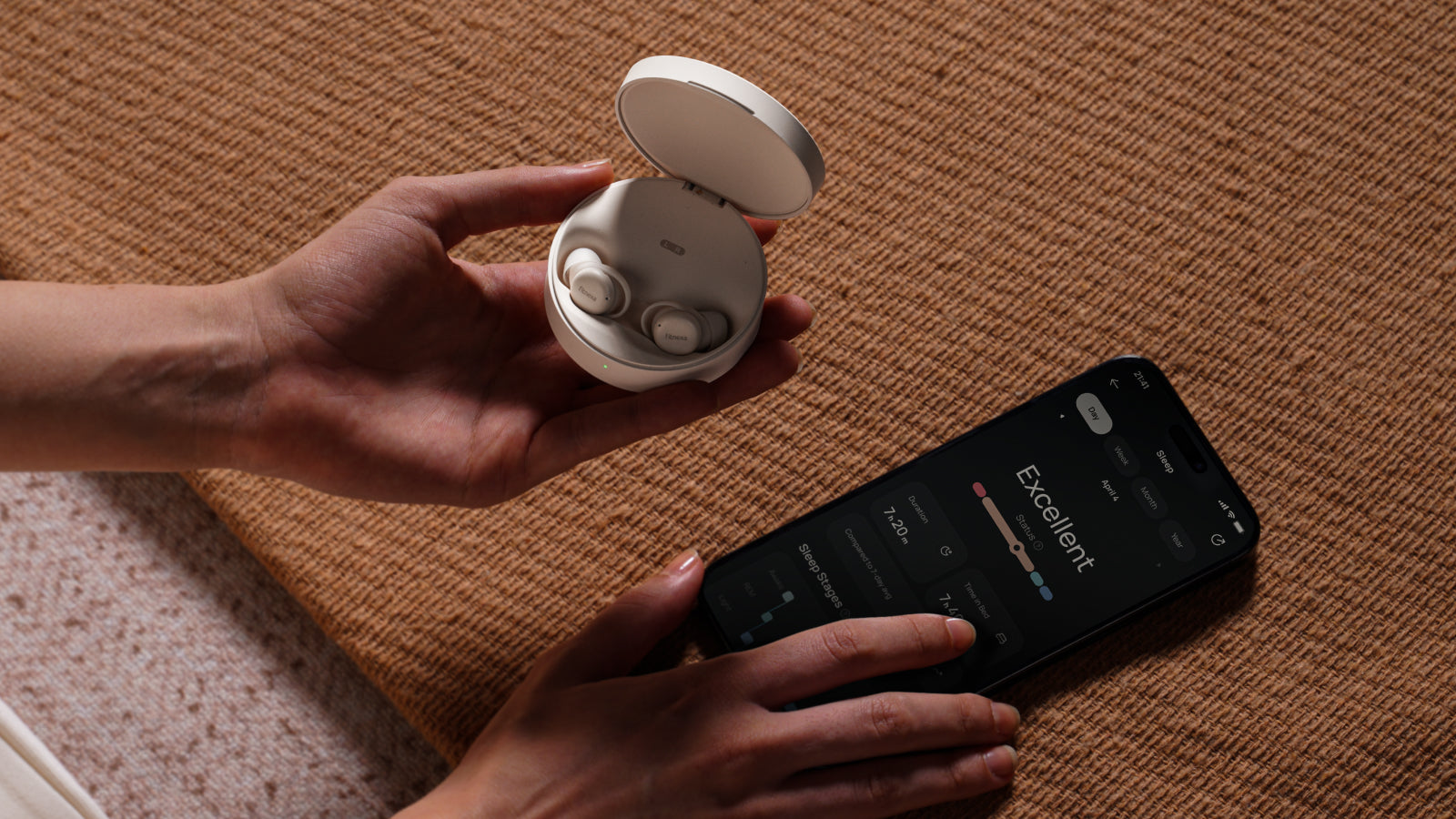
Many people start with phone audio or a bedside sound machine and encounter the same real constraint: a volume high enough to mask irregular noise can disturb a partner, while a lower volume may fail to stabilize the sound environment as conditions change across the night. Fitnexa SomniPods 3 are designed for this gap by combining two complementary layers of noise control that address different parts of the sound spectrum. The first layer is the physical ear tip seal, which reduces incoming sound by forming a stable barrier at the ear canal and is particularly helpful for higher frequency disturbances such as intermittent household sounds or inconsistent neighbor noise. The second layer is adaptive ANC, which uses microphones and signal processing to reduce lower frequency, more persistent noise that tends to travel through walls and floors, such as ventilation systems, traffic hum, or a steady background rumble. By pairing passive isolation with adaptive ANC, SomniPods 3 aims to lower the overall noise load at the ear rather than relying on louder playback to cover sound, which can help increase the arousal threshold and support sleep continuity for noise sensitive sleepers. If you want more detail on the system design, you can explore Shop SomniPods 3, and if you want guidance that adapts to your sleep patterns, start with Fitnexa App and AI Coach.
A simple six night test to decide what actually helps you
Rather than switching tools every few nights and relying on memory, a short structured trial can clarify what changes your sleep most. For the first three nights, use app only support while keeping bedtime, caffeine cutoff, and wind down window consistent, and note sleep onset latency, the number of remembered awakenings, and perceived restoration the next day. For the next three nights, keep the routine identical but add a hardware layer, keeping volume conservative and steady, and track the same outcomes. This approach mirrors how behavioral sleep interventions are evaluated in practice: control the routine first, change one meaningful variable at a time, and interpret results over a small series rather than a single night. If disruptions drop but severe daytime sleepiness remains, treat that as a signal to seek medical guidance rather than further optimization, and review NHLBI diagnosis and treatment overview for clinician oriented pathways.
Final thoughts
Sleep apps are valuable for awareness and routine shaping, but they are not designed to control the sleep environment or reliably translate nightly patterns into a personalized action plan. Hardware plus AI is not inherently better, it is better matched to a different problem: fragmented sleep driven by disruption and unclear next steps. If you are building a complete sleep system, focus on lowering disruption, protecting consistency, and using data to guide small, stable changes rather than constant experimentation.